
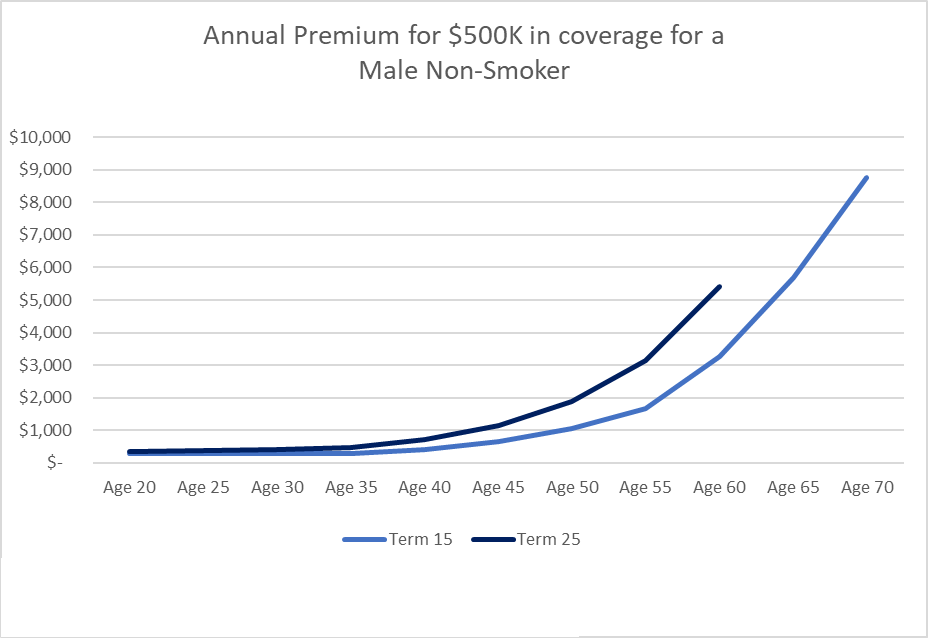
Whole life insurance rates increase with age because insurers price policies based on mortality risk and life expectancy. The younger and healthier you are, the lower your fixed lifetime premium.
You want numbers first. Below is a realistic rate overview based on national market averages for a $250,000 whole life policy for a healthy, non-smoking applicant.
What Are Average Whole Life Insurance Rates by Age?
A 30-year-old pays significantly less than a 50-year-old for the same coverage. Rates remain fixed for life once issued.
Whole Life Insurance Rates by Age (Non-Smoker, $250,000 Coverage)
| Age | Male Monthly Premium | Female Monthly Premium |
|---|---|---|
| 25 | $185 – $220 | $160 – $195 |
| 30 | $210 – $250 | $185 – $225 |
| 35 | $250 – $300 | $220 – $270 |
| 40 | $320 – $390 | $280 – $340 |
| 45 | $420 – $520 | $360 – $450 |
| 50 | $600 – $750 | $500 – $650 |
| 55 | $850 – $1,050 | $700 – $900 |
| 60 | $1,200 – $1,500 | $1,000 – $1,300 |
Rates vary by carrier, underwriting class, and dividend structure.
Why Do Whole Life Insurance Rates Increase With Age?
Insurers raise premiums with age because mortality risk increases over time.
Life insurance companies use:
-
Actuarial mortality tables
-
Health classification systems
-
Medical underwriting data
-
Life expectancy statistics
The Social Security Administration publishes life expectancy data that insurers integrate into pricing models.
Older applicants present higher statistical claim probability. Premium reflects that risk.
How Does Health Impact Whole Life Insurance Rates?
Health classification significantly changes premium cost at any age.
Underwriting classes typically include:
-
Preferred Plus
-
Preferred
-
Standard
-
Substandard (Table-rated)
Example at age 40:
-
Preferred male: ~$340/month
-
Standard male: ~$420/month
-
Tobacco user: $650+ per month
Smoking status alone can double premiums.
Insurers assess:
-
Blood pressure
-
Cholesterol levels
-
BMI
-
Family medical history
-
Prescription records
How Does Coverage Amount Change Whole Life Premiums?
Higher death benefits increase premiums proportionally.
Approximate scaling:
-
$100,000 policy = ~40% of $250,000 rate
-
$500,000 policy = ~2× $250,000 rate
-
$1 million policy = ~4× $250,000 rate
Whole life combines permanent coverage with a guaranteed death benefit and cash value accumulation.
Why Is Whole Life Insurance More Expensive Than Term Life?
Whole life costs more because it provides lifetime coverage and builds guaranteed cash value.
Whole life includes:
-
Fixed premium
-
Guaranteed death benefit
-
Tax-deferred cash value growth
-
Dividend eligibility (mutual insurers)
Term life only provides temporary protection without savings accumulation.
If you want to estimate protection needs first, review a life insurance calculator to determine appropriate coverage before comparing permanent policies.
Do Dividends Affect Whole Life Insurance Rates?
Dividends do not reduce base premiums but may reduce net cost over time.
Mutual insurers such as:
-
MassMutual
-
Northwestern Mutual
-
New York Life
may pay annual dividends when performance allows.
Policyholders can:
-
Take dividends in cash
-
Reduce premiums
-
Purchase paid-up additions
-
Accumulate interest
Dividend payments are not guaranteed.
Why Do Women Often Pay Less for Whole Life Insurance?
Women pay lower premiums because they statistically live longer than men.
According to U.S. life expectancy data:
-
Average male life expectancy ≈ 73–75 years
-
Average female life expectancy ≈ 79–81 years
Longer life expectancy lowers mortality risk during early policy years, reducing cost.
However, some states restrict gender-based pricing.
What Is the Best Age to Buy Whole Life Insurance?
Your 20s and early 30s offer the lowest lifetime premiums.
Example comparison (male, $250,000 coverage):
-
Buy at 30: ~$230/month
-
Buy at 45: ~$470/month
-
Lifetime difference: over $85,000 in total premiums
Buying earlier locks in lower pricing permanently.
Delaying increases both premium and lifetime cost.
Is Whole Life Insurance Worth It at Older Ages?
Whole life after age 60 becomes significantly more expensive and may serve estate or final expense planning.
Common use cases for older buyers:
-
Estate liquidity
-
Wealth transfer
-
Funeral expense coverage
-
Legacy planning
For business succession or corporate policies, see guidance under commercial insurance planning if coverage supports buy-sell agreements.
How Do You Evaluate a Whole Life Insurance Company?
Choose insurers with strong financial ratings from:
-
A.M. Best
-
Moody’s
-
Standard & Poor’s
Financial strength ratings indicate the insurer’s ability to pay long-term claims.
Policy structure, dividend history, and rider options also matter.
If you want guidance tailored to Georgia residents or personalized comparisons, Matrix Insurance Services provides policy analysis and carrier comparisons.
Whole life insurance rates depend primarily on age, health classification, gender, and coverage amount. Earlier purchase reduces lifetime cost and locks in permanent protection.
